
The RCM, the EESS, and What They Mean for Your Products
Quick answer
- The RCM is the mandatory compliance mark for electrical and electronic equipment sold in Australia, replacing the older A-Tick and C-Tick marks.
- It covers two separate frameworks, electrical safety under the EESS and electromagnetic compatibility under ACMA.
- Access Communications holds RCM number E4073 and ACMA supplier code N692.
In Australia, electrical and electronic products must meet specific safety and performance standards before they can be legally sold. The Regulatory Compliance Mark (RCM) is the single mandatory compliance mark that indicates a product meets these requirements. This guide explains what the RCM means, how it works, the regulatory frameworks behind it, and what the older A-Tick and C-Tick marks signify on legacy equipment.
Guide Index
- The Regulatory Compliance Mark (RCM)
- Why the RCM Covers Two Different Things
- The Electrical Equipment Safety System (EESS)
- ACMA: EMC, Radio and Telecommunications
- Superseded Marks: A-Tick and C-Tick
- State and Territory Electrical Safety Authorities
- Frequently Asked Questions
The Regulatory Compliance Mark (RCM)
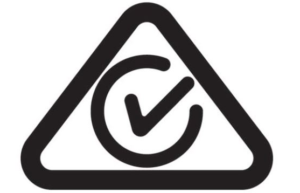
The RCM is the mandatory compliance mark for electrical and electronic equipment sold in Australia and New Zealand. Introduced in 2013 and made fully mandatory from 1 March 2016, it replaced the older A-Tick and C-Tick marks with a single unified symbol. Any electrical or electronic product sold in Australia must carry the RCM.
Access Communications holds RCM (SAA) number E4073. Our ACMA supplier code is N692. We use and recommend Austest Laboratories for all product compliance testing.
To see how the RCM applies specifically to power cords with mixed connector ratings, see our Understanding Power Cord Ratings guide.
Why the RCM Covers Two Different Things
The RCM is jointly owned by two separate regulatory bodies: the Australian Communications and Media Authority (ACMA) and the state and territory electrical safety regulators operating under the Electrical Equipment Safety System (EESS). This is a source of genuine confusion in the industry.
The same RCM symbol is used to indicate compliance with two entirely separate regulatory schemes:
- EESS compliance: Confirms the product is electrically safe and meets Australian electrical safety standards. Managed by state and territory electrical safety regulators.
- ACMA compliance: Confirms the product meets electromagnetic compatibility (EMC), electromagnetic emissions (EME), telecommunications, and radiocommunications standards. Managed by ACMA.
A product carrying the RCM may have been assessed under one scheme, the other, or both. Seeing the RCM on a product does not automatically confirm it has been assessed under both frameworks. For electrical equipment sold in Australia, both EESS and ACMA requirements typically apply.
The Electrical Equipment Safety System (EESS)
The EESS is the national framework for electrical equipment safety in Australia. It requires that all "in-scope" electrical equipment sold in Australia is registered by a Responsible Supplier who takes legal accountability for the product's safety compliance.
In-Scope vs Out-of-Scope Equipment
Not all electrical equipment falls under the EESS. "In-scope" equipment includes most mains-connected consumer and commercial electrical products. "Out-of-scope" equipment includes some industrial and specialist categories. If you are unsure whether a specific product category is in-scope, consult the EESS equipment safety rules or contact the regulator in your state.
Three Levels of Risk
The EESS classifies in-scope equipment into three risk levels, with progressively more stringent compliance requirements:
| Level | Risk Classification | Requirements | Examples |
|---|---|---|---|
| Level 1 | Low risk | Electrical safety report required. Responsible Supplier registered on EESS platform. | Power boards, extension leads, some lighting |
| Level 2 | Medium risk | Product must be registered on EESS platform. Compliance folder maintained by Responsible Supplier. | Most household appliances, IT equipment, UPS units |
| Level 3 | High risk | Certification by an accredited certification body required before registration. Most stringent requirements. | Fixed wiring equipment, switchboards, some industrial equipment |
The EESS Platform
The EESS registration database was replaced by the new EESS Platform in October 2024. Responsible Suppliers register on this platform and are granted authorisation to apply the RCM to their products. The platform maintains national certification, equipment registration, and supplier databases.
Record Keeping
Responsible Suppliers are required to maintain compliance records for up to 10 years. This includes test reports, certificates, and technical documentation demonstrating that the product meets the applicable Australian standards. Any design changes to a product after initial registration may invalidate the existing compliance and require re-assessment.
ACMA: EMC, Radio and Telecommunications
The Australian Communications and Media Authority (ACMA) governs electromagnetic compatibility, electromagnetic emissions, radiocommunications, and telecommunications compliance. Products subject to ACMA requirements include anything that emits radio frequency signals, connects to a telecommunications network, or could interfere with other equipment.
This covers a broad range of products including Wi-Fi equipment, Bluetooth devices, mobile phones, networking equipment, power supplies (which can generate EMI), and anything with wireless connectivity. ACMA compliance is demonstrated through testing to the relevant standards and a Supplier's Declaration of Conformity (SDoC).
From 1 January 2025, updated mandatory standards apply:
- AS/NZS CISPR 32:2023 replaces older EMC standards for multimedia equipment
- AS/NZS 62368-1 replaces AS/NZS 60950-1 for IT and AV equipment
Certificates issued under the older standards were valid until 31 December 2025 only.
Superseded Marks: A-Tick and C-Tick

A-Tick: Indicated compliance with Australian telecommunications requirements, confirming the equipment could be legally connected to the telephone network. Phased out from 1 March 2016, replaced by the RCM. Our ACMA supplier code is N692.

C-Tick: Indicated compliance with electromagnetic compatibility (EMC) and radiocommunications standards, confirming the product could be legally sold in Australia. Phased out from 1 March 2016, replaced by the RCM.
Products manufactured before March 2016 may still carry A-Tick or C-Tick marks. These products were legally compliant at the time of manufacture. The marks themselves are no longer issued but remain valid on legacy products already in the field.
State and Territory Electrical Safety Authorities
While the RCM is a national mark, electrical safety compliance is enforced by regulatory authorities in each state and territory. An approval obtained in any one state is recognised nationally. The relevant authorities are:
| State/Territory | Regulatory Authority | Example Approval Number |
|---|---|---|
| ACT | ACT Planning & Land Authority | |
| NSW | NSW Fair Trading | NSW13816 |
| NT | NT Worksafe | |
| QLD | Electrical Safety Office, Department of Justice | Q96249 |
| SA | Office of the Technical Regulator | S12345 |
| Tas | Workplace Standards Tasmania | |
| Vic | Energy Safe Victoria | V90263 |
| WA | Department of Commerce | W2015 |
Frequently Asked Questions
What does RCM mean on electrical equipment?
RCM stands for Regulatory Compliance Mark. It is the mandatory compliance mark for electrical and electronic products sold in Australia and New Zealand. It confirms the product has met the applicable Australian standards for electrical safety (under the EESS) and/or electromagnetic compatibility and telecommunications (under ACMA). Any mains-connected or wireless product sold in Australia must carry the RCM.
What is the difference between RCM and the old C-Tick and A-Tick?
The C-Tick indicated EMC and radiocommunications compliance. The A-Tick indicated telecommunications compliance. Both were phased out and replaced by the RCM from 1 March 2016. The RCM consolidates both marks into a single symbol. Products manufactured before that date may still carry C-Tick or A-Tick marks, which remain valid on existing products but are no longer issued for new products.
Does the RCM mean a product is electrically safe?
Not necessarily on its own. The RCM is used by two separate regulatory bodies for different purposes. A product may carry the RCM to indicate ACMA compliance (EMC and telecommunications) without having been assessed for electrical safety under the EESS. For in-scope electrical equipment, both EESS registration and ACMA compliance are required. Always verify both when assessing compliance of electrical products.
What is the EESS?
The Electrical Equipment Safety System (EESS) is the national framework for electrical equipment safety in Australia. It requires manufacturers, importers, and distributors of in-scope electrical equipment to register as Responsible Suppliers and ensure their products meet applicable electrical safety standards. The EESS Platform (replacing the former registration database in October 2024) maintains national records of certified equipment and registered suppliers.
Do I need RCM certification to sell electrical products in Australia?
Yes. All in-scope electrical and electronic products sold in Australia must carry the RCM. The Responsible Supplier (manufacturer, importer, or distributor) must be registered on the EESS Platform and must ensure the product meets the relevant Australian standards before affixing the mark. Selling non-compliant electrical equipment in Australia can result in fines, product recalls, and removal from market.
How long must compliance records be kept?
Responsible Suppliers are required to maintain compliance records for up to 10 years. This includes test reports, certificates, and technical documentation. Any design changes to a product after initial compliance assessment may require re-testing and re-registration.
Your Project, Perfected. That's The Access Advantage.
- Expert Local Support, Since 1973: Don't waste time with guesswork. Our experts have seen it all and are ready to provide the right solution, right now. Your success is our business.
- Your Specs, Your Brand, Our Build: Off-the-shelf not cutting it? We specialise in building custom cables and assemblies to your exact specifications, branded for your business. Let's create it together.
- Guaranteed for Life: Buy it once. Trust it forever. Our products are backed by a limited lifetime warranty, so you can invest in quality with zero risk. *Warranty excludes third-party brands such as HALO and UPS.
Let's get your project started.
Talk to an expert today for a custom quote or browse the solutions most relevant to your search.