
Understanding the 600-Series and RJ Connector Systems
Quick answer
- Australia's 600-series bayonet connectors (605 plug, 610 socket) run parallel to the modern RJ11/RJ12 modular system.
- Both systems are still in widespread use, and a range of adaptors bridges old equipment to new sockets.
- Access Communications stocks 605, 610, and RJ adaptors, couplers, and sockets for every combination.
Australia has its own unique telephone connector system developed by Telecom Australia (now Telstra) in the 1960s, running parallel to the modular RJ connector system that became standard in North America and eventually worldwide. Understanding both systems, how they relate to each other, and how to bridge between them is essential for anyone connecting telephone equipment, VoIP adapters, or NBN services to Australian premises wiring.
Page Index
- Australian 600-Series Connectors
- The 605 Plug
- The 610 Socket
- Modular RJ Connectors
- RJ11 and RJ12
- Adapting Between 600-Series and RJ
- Modern Installations
- Frequently Asked Questions
- Common Products
Australian 600-Series Connectors
In the 1960s, Telecom Australia introduced the "colorfone" range of telephones with a purpose-designed plug and socket system. This system is known as the 600-series, named for the numbering convention used by Telecom Australia for its equipment. The 600-series connectors became the standard for Australian residential and commercial telephone installations and remain in use in millions of Australian premises.
The 600-series is a bayonet-style locking connector system. The plug locks into the socket with a quarter-turn rotation, providing a secure connection that resists accidental disconnection. This is different from the friction-fit clip-lock mechanism used by RJ modular connectors.
The 605 Plug
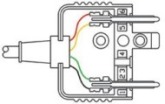
The 605 plug is the cable-end connector used on traditional Australian telephones, fax machines, and other telephone equipment. It is the male component of the 600-series connector pair.
- Conductors: Available in 4-conductor and 6-conductor versions. The 4-conductor version carries one telephone pair (tip and ring). The 6-conductor version carries two telephone pairs.
- Connection method: Conductor connections inside the plug use quick-connect crimps rather than screw terminals.
- Mating sockets: The 605 plug mates with 610, 611, and 612 sockets.
- Locking mechanism: Bayonet-style. Insert the plug into the socket and rotate clockwise approximately 90 degrees until the lug engages.
| Pin | Function | Colour (typical) |
|---|---|---|
| 1 | Pair 2 Tip (A-wire) | Black |
| 2 | Pair 1 Tip (A-wire) | Green |
| 3 | Not used (earth/switching) | - |
| 4 | Not used (earth/switching) | - |
| 5 | Pair 2 Ring (B-wire) | Yellow |
| 6 | Pair 1 Ring (B-wire) | Red |
The 610 Socket
The 610 socket is the traditional Australian telephone wall socket, designed to accept the 603, 605, and 606 plugs. It is the female component of the 600-series system.
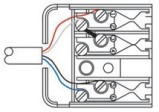
- Conductors: 6 conductors with screw terminals for premises cable termination.
- Installation: Wall-mounted. Premises telephone cable is terminated directly onto the screw terminals inside the socket body.
- Where found: Most Australian homes and commercial premises built before the early 2000s have 610 sockets. They are still widely installed in renovation and extension work when matching existing infrastructure.
| Terminal | Function | Colour (typical) |
|---|---|---|
| 1 | Pair 2 Tip | Red |
| 2 | Pair 1 Tip | White |
| 3 | Earth / switching | - |
| 4 | Earth / switching | - |
| 5 | Pair 2 Ring | Black |
| 6 | Pair 1 Ring | Blue |
The 611 socket is a variant of the 610 that includes Mode 3 switching contacts, used for connecting alarm panels and other auxiliary equipment that needs to seize the telephone line. See our telephone wiring guide for Mode 3 wiring details.
Modular RJ Connectors
Following the deregulation of the Australian telecommunications market in the 1990s, the North American modular connector system was introduced as an alternative to the 600-series. Modular connectors use a friction-fit clip-lock mechanism (the small plastic tab that clicks into place) and are smaller, cheaper to produce, and easier to terminate than the 600-series bayonet connectors.
Modular connectors gradually became dominant in new commercial and residential installations throughout the 1990s and 2000s. Today, new telephone socket installations in Australia almost exclusively use RJ modular connectors, and NBN equipment uses RJ connectors for all telephone connections.
RJ11 and RJ12
RJ11 and RJ12 are the two modular connector types used for telephone connections in Australia.
| Connector | Positions / Contacts | Pairs Supported | Common Use |
|---|---|---|---|
| RJ11 | 6P2C (6 position, 2 contact) | 1 pair (single line) | Standard telephone handset connections, modems, fax machines |
| RJ14 | 6P4C (6 position, 4 contact) | 2 pairs (two lines) | Two-line telephone systems |
| RJ12 | 6P6C (6 position, 6 contact) | 3 pairs (three lines) | Multi-line systems, PABX connections |
All three are physically identical in size and shape. An RJ11 plug fits into an RJ12 socket and vice versa. The difference is only in how many of the six possible contact positions are populated with metal contacts.
The standard single-line telephone connection in Australian homes and most small businesses uses RJ11 (two contacts, one pair). The centre two pins (pins 3 and 4 in a 6-position housing) carry the telephone line.
Adapting Between 600-Series and RJ
Because both 600-series and RJ connectors are in widespread use across Australian premises, a range of adaptors and converters is available to bridge between the two systems.
| Adaptor Type | Use Case |
|---|---|
| 610 socket to RJ12 adaptor | Plugs into an existing 610 wall socket and provides an RJ12 outlet for modern phones, faxes, or modems |
| RJ45 to 605 plug adaptor | Connects modern Cat5e/Cat6 patch cable to a 610 wall socket. Used when running phone services through structured cabling |
| 605 to RJ11 line cord | Line cord with a 605 plug at one end and RJ11 at the other, for connecting modern phones to old-style sockets |
| Double adaptor (610 to 2x RJ12) | Plugs into a 610 socket and provides two RJ12 outlets for connecting two devices to one socket |
Modern Installations
In new commercial installations, Cat5e or Cat6 structured cabling with RJ45 modular wall outlets is the standard for all communications cabling, including telephone. A single Cat6 cable can carry both data and voice services. Where telephone service is required at a workstation, the RJ45 outlet is typically patched to a telephone port at the patch panel using a voice-grade keystone jack.
For NBN installations, the NBN connection box (NCD) or the NBN-compatible modem provides an RJ11 or RJ12 phone port. This port delivers the VoIP telephone service. For buildings with existing internal telephone wiring, the NBN phone port can feed the internal wiring through the original telephone distribution point, allowing existing 610 wall sockets throughout the building to carry the NBN voice service.
Frequently Asked Questions
Does the 605 plug still work in modern Australian homes?
Yes. The 605 plug is still widely supported. Most modern Australian wall outlets either include an old-style 610 socket alongside a modern RJ12 socket, or accept an adaptor that converts between the two. Access Communications stocks a full range of 605, 610, and RJ adaptors for connecting old equipment to new sockets.
What is the difference between a 605 plug and a 610 socket?
The 605 plug is the cable-end connector traditionally used on Australian telephones and equipment. The 610 socket is the wall-mounted receptacle that accepts the 605 plug. They are designed to mate with each other. Both date from the Telecom Australia era of the 1960s onwards.
What is the difference between RJ11 and RJ12?
Both are the same physical size and shape. RJ11 uses two of the six possible contact positions and carries one telephone line. RJ12 uses all six contact positions and can carry up to three lines. An RJ11 plug fits into an RJ12 socket. For standard single-line telephone connections in Australian homes and offices, RJ11 is the common specification.
Can I plug a telephone into an RJ45 network socket?
Physically an RJ11 plug will insert into an RJ45 socket, but this is not recommended and may damage the socket over time. The correct approach is to use a keystone jack wired for voice at the wall plate, or use a dedicated telephone socket. In structured cabling installations, voice and data are typically separated at the patch panel even when using the same Cat6 cable infrastructure.
What adaptor do I need to connect a modern phone to an old 610 socket?
A 610 to RJ12 adaptor plugs directly into the 610 wall socket and provides an RJ12 outlet for your modern phone or modem. Access Communications stocks these adaptors in both single and double socket configurations.
Is it legal to wire my own telephone socket in Australia?
Work on the customer side of the network boundary point (the first socket installed by the carrier) is permitted by the owner-occupier in most states for single-dwelling residences, but rules vary. Work that connects to the Telstra network infrastructure requires a licensed cabler. If in doubt, engage a registered cabler. Penalties for unlicensed work on the telecommunications network can be significant.
Common Products
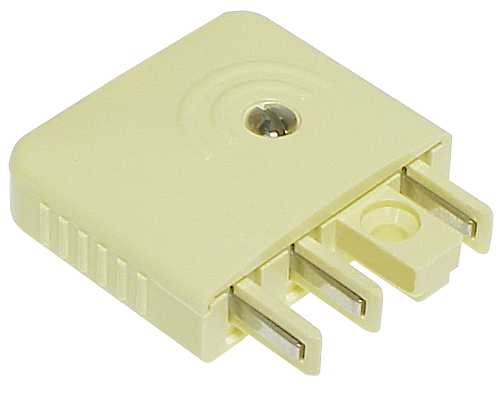 604 Telephone Plug |
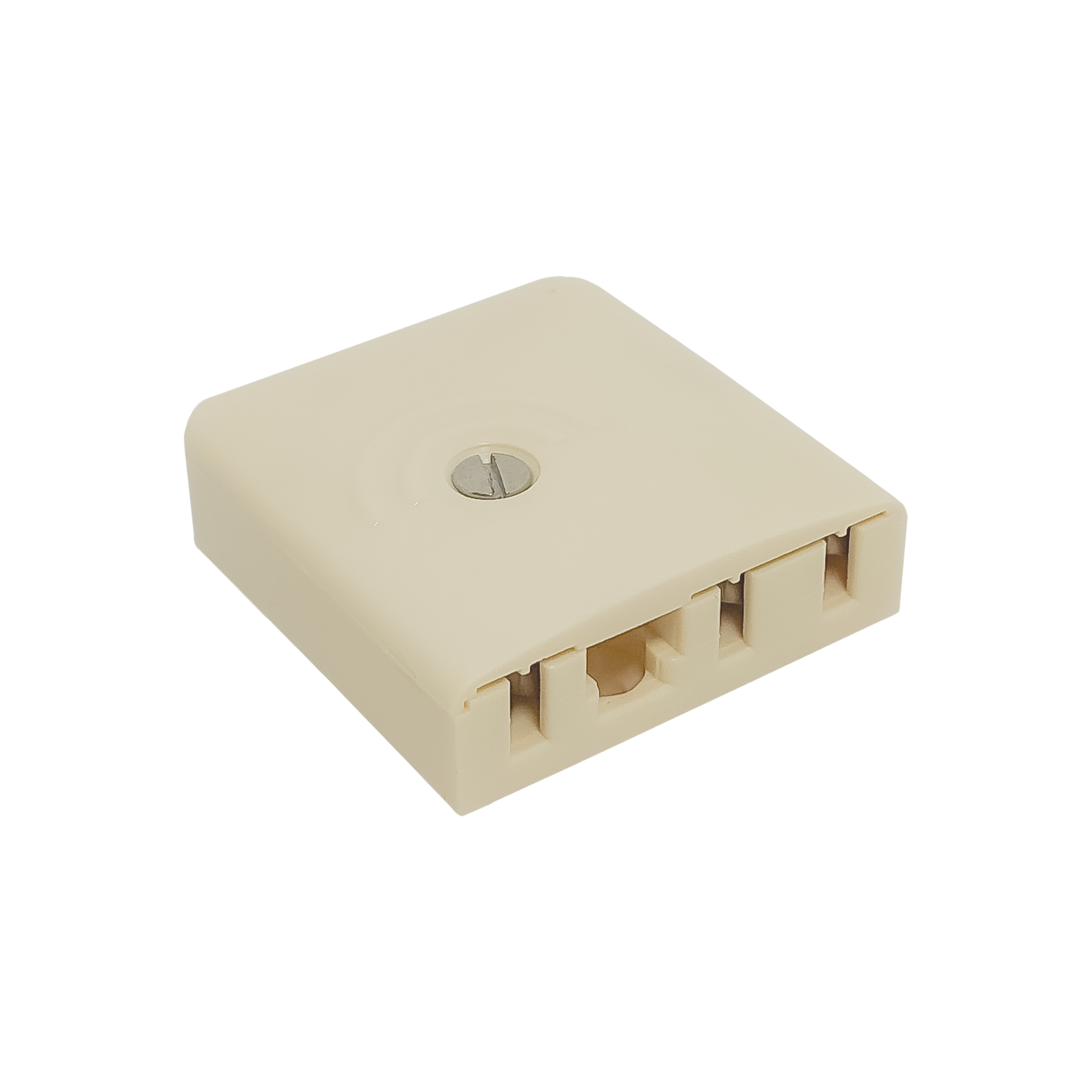 611 Mode-3 Telephone Wall Socket |
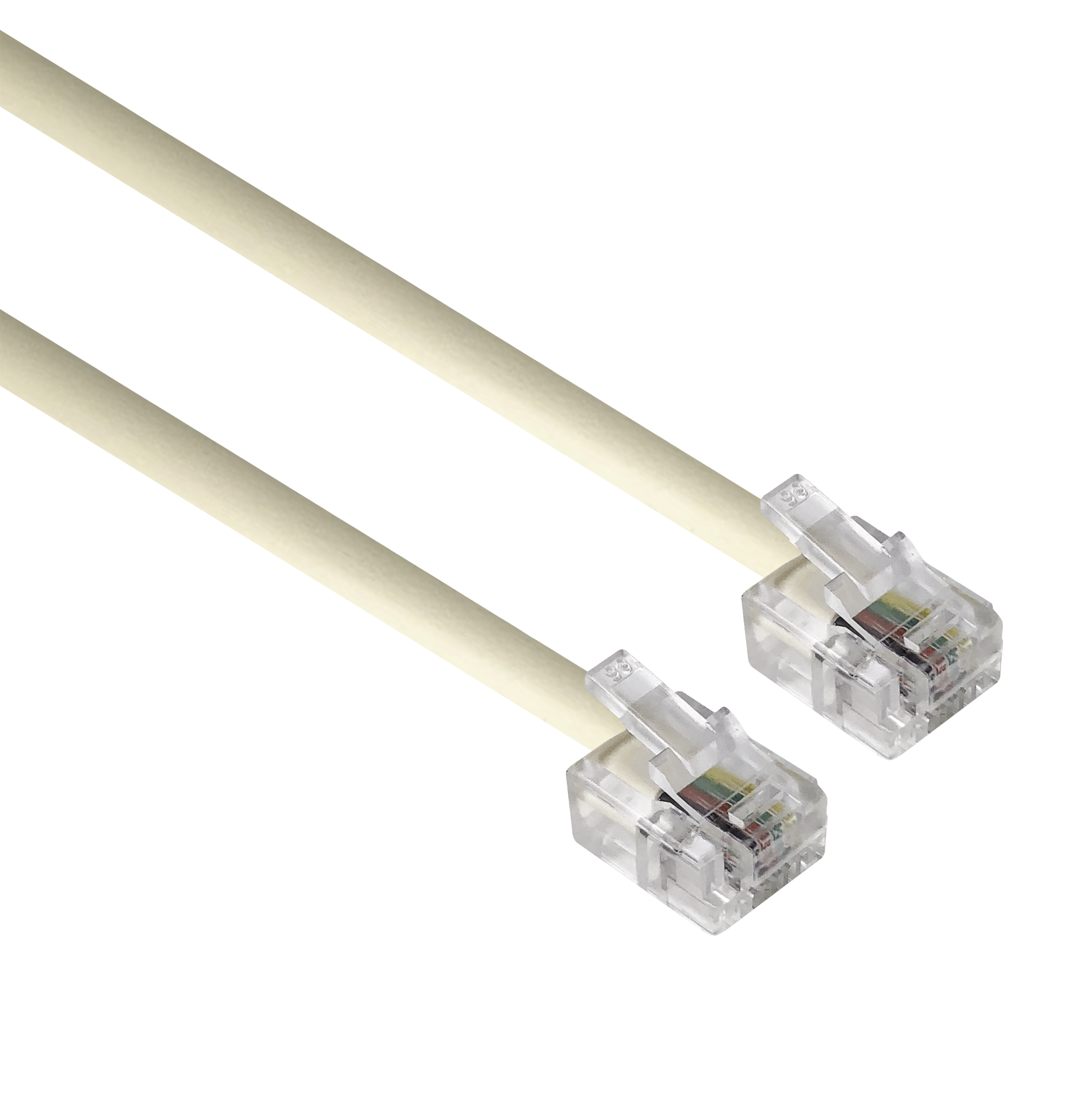 4 Conductor Modular Line Cord |
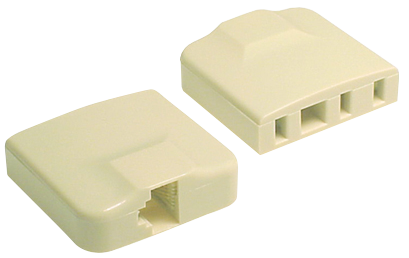 610 Modular Socket Adaptor |
View all telephone adaptors, couplers and sockets
Your Project, Perfected. That's The Access Advantage.
- Expert Local Support, Since 1973: Don't waste time with guesswork. Our experts have seen it all and are ready to provide the right solution, right now. Your success is our business.
- Your Specs, Your Brand, Our Build: Off-the-shelf not cutting it? We specialise in building custom cables and assemblies to your exact specifications, branded for your business. Let's create it together.
- Guaranteed for Life: Buy it once. Trust it forever. Our products are backed by a limited lifetime warranty, so you can invest in quality with zero risk. *Warranty excludes third-party brands such as HALO and UPS.
Let's get your project started.
Talk to an expert today for a custom quote or browse the solutions most relevant to your search.